
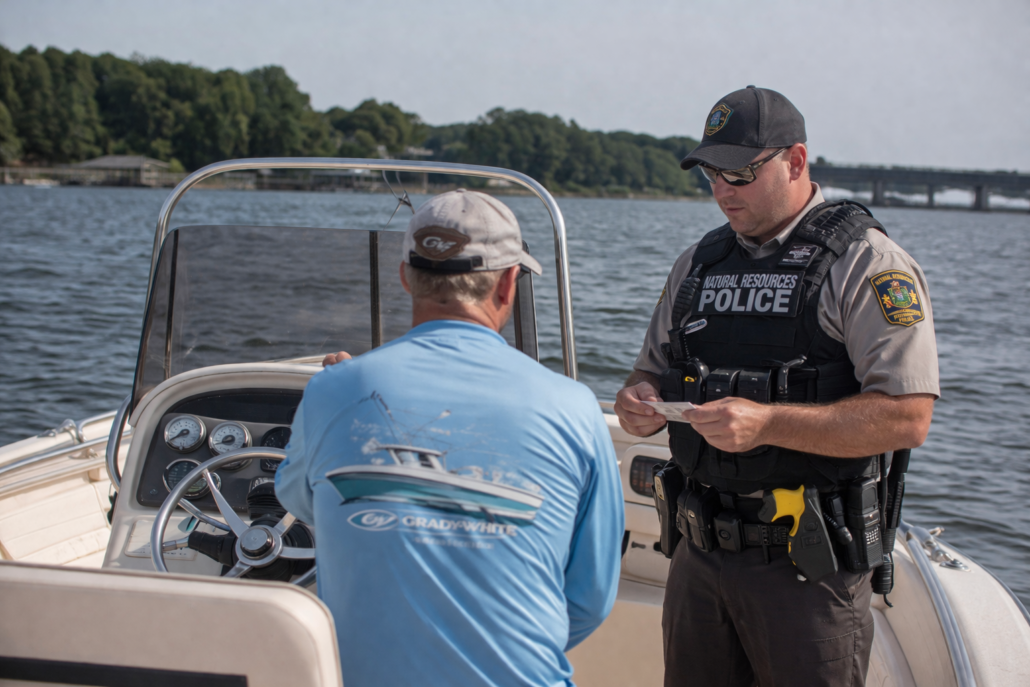
Charged with Boating Under the Influence on the Chester River or Chesapeake Bay? What Eastern Shore Residents Need to Know About Maryland BUI Laws
Summer on Maryland’s Eastern Shore means one thing for a lot of people: getting out on the water. Whether you’re anchoring off Rock Hall, running through Kent Narrows, fishing the Chester River, or spending a weekend afternoon cruising Eastern Bay, boating is a way of life here. And for most people, a day on the water includes a cooler full of cold drinks.
That’s perfectly legal. Drinking on a boat is not against the law in Maryland. But operating a boat while impaired is — and the consequences are far more serious than most Eastern Shore boaters realize. Every summer, Maryland Natural Resources Police ramp up patrols specifically targeting impaired boating across the exact waterways that Kent County and Queen Anne’s County residents use most. And every summer, people are shocked to find out what a BUI charge actually means for their future.
This guide is designed to cut through the confusion. If you or someone you know has been charged with Boating Under the Influence on Maryland’s Eastern Shore, here is everything you need to know.
What Is a BUI and How Is It Different From a DUI?
BUI stands for Boating Under the Influence. In Maryland, it is the waterborne equivalent of a DUI — and it is treated with similar seriousness under state law. A person can be convicted of a BUI for operating a vessel while “under the influence” of alcohol, and when a boater has a blood alcohol concentration of .08% or greater, the court presumes that the boater was under the influence. Driving Laws That is the same legal limit as driving a car.
Maryland law also recognizes a separate but related charge called Boating While Impaired (BWI). A person can be convicted of a BWI for operating a vessel while so far impaired by any drug, combination of drugs, or combination of one or more drugs and alcohol that the person cannot operate a vessel safely. Driving Laws BWI is the lesser charge, but it still carries criminal penalties and a permanent record.
The key thing to understand is this: most Eastern Shore boaters assume that because they are on the water — not on a road — different rules apply. They don’t. Maryland’s BUI laws are enforced under the same legal framework as DUI laws, meaning it is illegal to operate a vessel on the water if your blood alcohol concentration is 0.08% or higher. This applies to all types of watercraft, including motorboats, sailboats, and even jet skis. Maronicklaw
There are some procedural differences in how a BUI case is handled compared to a DUI, and those differences actually matter a great deal when it comes to building a defense. But make no mistake about the outcome if you are convicted — it is a criminal conviction with real consequences.
Why Alcohol Hits Harder on the Water
One of the most important and least understood facts about boating and alcohol is that the water environment itself accelerates impairment. Even if you feel fine, the conditions on the Chesapeake Bay or the Chester River are actively working against you.
According to the U.S. Coast Guard, a boat operator is likely to become impaired more quickly than a driver of a vehicle. Criminal Law Lawyer Maryland The combination of factors at play on a boat — sun exposure, wind, heat, motion, noise, and vibration — all fatigue the body and mind much faster than sitting in an air-conditioned car. Two beers on a boat on a July afternoon can affect your coordination, reaction time, and judgment far more than two beers at a backyard barbecue.
Factors such as wind, waves, and sun exposure can exacerbate the effects of alcohol or drugs, making it more difficult to control a vessel safely. Maronicklaw This is not just a legal argument — it is physiology. The Eastern Shore’s open water conditions, bright summer sun reflecting off the Bay, and the physical demands of operating a boat all compound the effects of alcohol in ways that most recreational boaters never account for.
This is also something Natural Resources Police officers are trained to identify. They know what an impaired boater looks like, and they are specifically looking for it during peak boating season.
Who Enforces BUI Laws on the Eastern Shore?
This surprises a lot of people too. On land, if you get pulled over for suspected DUI, you know you’re dealing with a state trooper, sheriff’s deputy, or local police officer. On the water, the enforcement picture is different — and in some ways, the officers have broader authority.
The primary agency patrolling Maryland’s waterways is the Maryland Natural Resources Police. The NRP’s Eastern region covers Kent, Queen Anne’s, Caroline, Talbot, Dorchester, Somerset, Wicomico, and Worcester counties Wikipedia — essentially the entire Eastern Shore. They have a dedicated presence on the Chester River, Eastern Bay, Kent Narrows, and the Chesapeake Bay waters surrounding the Upper Shore.
But the NRP is not alone out there. Various agencies patrol Maryland’s waters for BUI, including the Natural Resources Police, the Maryland State Police, and county and city police departments that have their own marine units. The Herbst Firm The U.S. Coast Guard also has federal enforcement authority on navigable waters.
Members of the United States Coast Guard and Maryland Natural Resources Police do not need a reason to board your vessel before conducting a sobriety test. Criminal Law Lawyer Maryland This is a critical distinction from a traffic stop on land. On the road, an officer generally needs reasonable suspicion of a traffic violation or criminal activity to pull you over. On the water, officers have the authority to board your vessel for a safety inspection without any suspicion of wrongdoing — and once they’re on board, if they observe signs of impairment, a BUI investigation begins immediately.
NRP officers patrolling near the Chester River and Kent Narrows have stopped vessels for issues as routine as running without navigational lights, only to discover an impaired operator. Maryland Department of Natural Resources A simple equipment check or safety inspection can quickly turn into a criminal arrest.
When Does Enforcement Peak on the Eastern Shore?
If you spend time on Eastern Shore waterways, you need to understand when law enforcement is at its most active. The answer is predictable: every major summer holiday weekend and throughout the peak boating season from Memorial Day through Labor Day.
Maryland Natural Resources Police conduct an annual Operation Dry Water saturation patrol campaign each Independence Day weekend, which is statistically the busiest and most dangerous boating holiday of the year. Maryland Department of Natural Resources During these operations, NRP officers coordinate with the U.S. Coast Guard and local marine units to maximize coverage across Maryland waterways — including those right here on the Eastern Shore.
The large majority of boaters are only on the water from about May until September, and these are the months where law enforcement is out in full force, patrolling for boaters or jet skiers who are under the influence of alcohol or drugs. The Herbst Firm
Memorial Day weekend. Fourth of July. Labor Day. The weekends surrounding the Rock Hall Watermen’s Festival. Summer Saturdays in Kent Narrows. These are the times when NRP patrols are heaviest and when BUI arrests are most common on the Upper Eastern Shore. If you are operating a vessel during any of these periods, you should assume that law enforcement is on the water and watching.
What Happens When an NRP Officer Stops Your Boat?
Understanding what happens during a BUI stop is important — both so you know what to expect, and so you understand why the details of your stop matter so much when building a defense.
When an NRP officer approaches your vessel, they may initially indicate they are conducting a routine safety inspection. They will check for required safety equipment — life jackets, fire extinguishers, registration, navigational lights. But if during that interaction the officer observes signs of impairment — slurred speech, the smell of alcohol, bloodshot eyes, difficulty with balance or coordination — the stop quickly shifts to a BUI investigation.
At that point, the officer may ask you to submit to field sobriety tests. Here is where BUI cases diverge significantly from standard DUI cases on land, and where an experienced attorney can often find meaningful defense arguments.
Field sobriety tests on the water are more challenging than those conducted on land. The motion of the boat, even when docked, can affect balance and coordination, leading to inaccurate test results. Maronicklaw Standard field sobriety tests — the walk-and-turn, the one-leg stand, the horizontal gaze nystagmus — were designed and validated for use on flat, stable ground. A rocking dock or the deck of a vessel introduces variables that can make a sober person appear impaired. An experienced BUI defense attorney knows how to challenge these test results.
The officer may also request a breath test. Maryland law does not allow police to compel an operator to take a breathalyzer test unless the person was driving at the time the boat was in an accident involving serious injury or death. The Herbst Firm However, implied consent still applies. Maryland law states that when you elect to operate a vessel in Maryland waters, you have automatically consented to be tested for drugs and alcohol by law enforcement officials if suspected of BUI. Criminal Law Lawyer Maryland
What Are the Penalties for a BUI Conviction in Maryland?
This is where a lot of Eastern Shore boaters get a very unpleasant surprise. Many people assume a BUI is a minor boating ticket. It is not. It is a criminal misdemeanor with penalties that escalate significantly for repeat offenses.
For a first-offense BUI: a first-offense BUI is a misdemeanor and carries up to one year imprisonment and/or a maximum of $1,000 in fines. Driving Laws
For a second-offense BUI: a second-offense BUI is a misdemeanor and carries up to two years imprisonment and/or a maximum of $2,000 in fines. Driving Laws
For a third or subsequent offense: a third-offense BUI is a misdemeanor and carries up to three years imprisonment and/or a maximum of $3,000 in fines. Driving Laws
On top of the criminal penalties, a judge can also suspend the boating privileges of any BUI offender who refused a chemical test or had a BAC of .08% or greater for up to one year. Driving Laws Under Noah’s Law, which took effect in Maryland in 2024, a person can be prohibited from operating a vessel on Maryland waters for up to two years if convicted of operating while under the influence, and up to five years if the violation results in the death of another. Maronicklaw
If someone is injured or killed as a result of your BUI, the charges become felonies. A boater who causes the death of another while under the influence of alcohol or with a BAC of .08% or more is guilty of a felony and faces up to five years imprisonment and/or a maximum of $5,000 in fines. Driving Laws
The BUI-DUI Cross-Conviction Rule: A Game Changer
Here is one of the most significant and least understood changes in Maryland law in recent years — one that directly affects Eastern Shore boaters who may also drive.
Until recently, BUI and DUI convictions were counted separately. That meant someone could have a BUI on their record and still be treated as a first-time offender if they were later charged with a DUI. That changed with a law that took effect in October 2023.
Under the new law, certain previous convictions for drunk or drugged operation of a vehicle or vessel constitute prior convictions for the purpose of determining enhanced subsequent offender penalties. For example, if someone pled guilty to a BUI and was later convicted of a first-time DUI, that DUI actually counts as a second offense — just as if it were their second DUI conviction. Engel Law Group, P.C
The reverse is also true. A prior DUI conviction on your driving record now counts against you in a BUI case on the water. If you’ve had a DUI in the past and you’re now facing a BUI charge on the Chester River or Eastern Bay, you may already be classified as a repeat offender under Maryland law — with all the enhanced penalties that come with it.
This is a major reason why Eastern Shore residents who spend significant time both on the road and on the water need to take both types of charges extremely seriously and handle each one with proper legal representation.
Does a BUI Affect Your Car Driver’s License?
This is one of the most common questions people ask, and the answer is nuanced. A drunken boating conviction does not impact your driving record in Maryland and will not impact the status of your Maryland driver’s license Criminal Law Lawyer Maryland in the same direct way a DUI would. The BUI charge and your car driving record are treated as separate administrative matters.
However, the cross-conviction rule described above means that a BUI conviction can absolutely affect how a future DUI is handled and prosecuted. And depending on the circumstances — particularly if your BUI involved an accident, a fatality, or a very high BAC — prosecutors and courts may take a harder line in any subsequent proceedings involving your driving privileges.
The bottom line: even if a BUI doesn’t directly suspend your car license, it creates a criminal record and a prior offense designation that can haunt you in any future alcohol-related legal matter, whether on land or water.
Why Eastern Shore Boaters Face Unique Risks
Living and boating on the Upper Eastern Shore puts you in one of the most heavily patrolled boating regions in Maryland during the summer months. The Chester River, Eastern Bay, Kent Narrows, and the Chesapeake Bay waters off Rock Hall and Chestertown are all well-known NRP patrol zones. Officers stationed out of the Stevensville outreach unit have direct coverage over the exact waterways where Kent County and Queen Anne’s County residents boat most frequently.
The culture of the Eastern Shore also plays a role. Boating here isn’t just recreation — it’s community. Crab feasts on the water, afternoon rafting parties at popular sandbar spots, fishing tournaments that start early and end late — these are normal parts of summer life on the Shore. But they also create situations where alcohol consumption and vessel operation overlap in ways that can quickly lead to a BUI stop if you’re not careful about who is behind the helm.
And unlike driving on a road — where you can pull into a parking lot and stop if you’ve had too much — there is no simple equivalent on the water. You have to get back to the dock somehow. That reality, combined with the broad boarding authority of NRP officers and the U.S. Coast Guard, makes boating a uniquely high-risk environment for alcohol-related enforcement.
What to Do If You Are Stopped by Natural Resources Police on the Water
If an NRP officer or Coast Guard vessel approaches you on the water, stay calm and cooperate with the safety inspection. You are required to allow officers to conduct safety checks.
However, you should be aware of your rights during any transition from a safety inspection to a criminal investigation. Here are a few key points:
Be polite and cooperative, but be mindful of what you say. Statements you make during the stop can and will be used against you. You are not required to answer questions beyond basic identification and vessel registration.
Understand that field sobriety tests on the water are not the same as those on land. The results can be challenged. If you are asked to perform sobriety tests, the conditions of the test — the boat’s motion, the surface you are standing on, lighting, wind — all matter.
If you are arrested, invoke your right to an attorney immediately and do not make additional statements until you have spoken with one.
Contact a local BUI defense attorney as soon as possible after your arrest. The details of the stop, the boarding, the field tests, and the breath test procedure all need to be reviewed promptly while the facts are fresh.
You Need a Local Attorney Who Knows These Waterways and These Courts
A BUI case on Maryland’s Eastern Shore is not the same as a DUI case in Baltimore. The waterways are different, the enforcement agencies are different, the procedures are different, and the courts are different. Kent County District Court and Queen Anne’s County District Court have their own rhythms, their own prosecutors, and their own approaches to these cases.
What you need is an attorney who has been practicing in these courts for decades — not someone who drives down from Baltimore for your hearing and has never met the local prosecutors before.
At the Law Offices of David N. Mabrey, we have handled thousands of DUI, DWI, and alcohol-related criminal cases over more than 30 years right here on the Eastern Shore. David Mabrey was born and raised on the Upper Shore. He understands the waterways, the communities, and the courts. As a former Baltimore City Prosecutor, he knows exactly how the prosecution builds its case — and exactly where the weaknesses are.
If you’ve been charged with a BUI on the Chester River, Eastern Bay, Kent Narrows, or anywhere on Maryland’s Upper Eastern Shore, don’t wait. The clock starts running the moment you’re charged, and early legal intervention can make a significant difference in how your case resolves.
Call the Law Offices of David N. Mabrey Today
A BUI charge is a criminal matter. It deserves serious legal representation from someone who knows the Eastern Shore, knows the courts, and knows how to fight for you.
📞 Call: 443-702-7708 🌐 Visit: davidnmabreylaw.com 📍 Chestertown | Pasadena
Free consultations available. Call today — the sooner we get involved, the more we can do.
Frequently Asked Questions
Is it illegal to drink alcohol on a boat in Maryland?
No — drinking alcohol as a passenger on a boat is not illegal in Maryland. What is illegal is operating a vessel while impaired. The person behind the helm is the one subject to BUI laws. That said, if you are the designated operator for the day, the safest and smartest choice is to stay completely sober. Designating a sober operator before you leave the dock — just like a designated driver — is the best way to protect yourself, your passengers, and everyone else on the water.
What is the legal BAC limit for operating a boat in Maryland?
The legal blood alcohol concentration limit for operating a boat in Maryland is 0.08%, mirroring the limit for drivers on the road. Maronicklaw However, it is important to understand that you can still be charged with Boating While Impaired (BWI) even if your BAC is below 0.08%, if an officer determines that alcohol or drugs have affected your ability to safely operate the vessel. In other words, the 0.08% threshold is not a safe zone — it is simply the point at which impairment is legally presumed.
Can Natural Resources Police board my boat without a reason?
Yes. Members of the United States Coast Guard and Maryland Natural Resources Police do not need a reason to board your vessel before conducting a sobriety test. Criminal Law Lawyer Maryland On land, a police officer generally needs reasonable suspicion to pull you over. On the water, officers have the authority to board your vessel for a routine safety inspection without any suspicion of wrongdoing at all. Once they are on board and observe signs of impairment, a BUI investigation can begin immediately. This is one of the most important distinctions between a DUI and a BUI — and one of the reasons why BUI arrests can catch boaters completely off guard.
Do I have to take a field sobriety test on the water?
Maryland’s implied consent law means that by operating a vessel on Maryland waters, you have consented to chemical testing if suspected of BUI. However, field sobriety tests — the physical coordination tests — are a different matter, and their results on the water are far less reliable than on land. The motion of the boat, even when docked, can affect balance and coordination, leading to inaccurate test results. Maronicklaw If you have been asked to perform field sobriety tests on a dock or vessel and believe the conditions affected your performance, document everything you remember about the surface, the motion, the lighting, and the wind, and share those details with your attorney immediately.
What happens if I refuse the breath test during a BUI stop?
Refusing a chemical test during a BUI stop has serious consequences. A judge can suspend the boating privileges of any BUI offender who refused a chemical test in violation of Maryland’s implied consent laws for up to one year. Driving Laws Additionally, a refusal can be used against you in court as evidence of consciousness of guilt. Unlike a DUI refusal — which triggers an immediate MVA administrative process affecting your car driver’s license — a BUI refusal is handled somewhat differently, but the consequences are still significant. Talk to an attorney before drawing any conclusions about whether a refusal helped or hurt your case.
Will a BUI conviction affect my car driver’s license?
Not directly in the same way a DUI does — a BUI conviction is handled separately from your driving record. However, the relationship between BUI and DUI convictions in Maryland has changed significantly under recent law. Under the new law, previous convictions for drunk or drugged operation of a vehicle or vessel now constitute prior convictions for the purpose of determining enhanced subsequent offender penalties. Engel Law Group, P.C That means if you have a BUI on your record and are later charged with a DUI — or vice versa — you may be treated as a repeat offender with significantly harsher penalties. A BUI is never just a boating matter. It has real implications for any future alcohol-related charge on land as well.
Is a BUI as serious as a DUI in Maryland?
Absolutely. BUI isn’t something to take lightly — in Maryland, BUI is considered a serious offense carrying penalties that can be just as severe as those for driving a car while intoxicated. Maronicklaw A first-offense BUI carries up to one year in jail and a $1,000 fine. A second offense doubles that. A third offense can mean up to three years behind bars. And under Noah’s Law, signed in 2024, courts can now ban a convicted BUI offender from operating any vessel on Maryland waters for up to two years — or five years if someone died as a result. These are not slap-on-the-wrist boating citations. They are criminal convictions that go on your permanent record.
What is Noah’s Law and how does it affect BUI cases in Maryland?
Noah’s Law is named after a young man who died in a June 2022 powerboat crash on the West River, where the operator of the boat was sentenced to 18 months in jail for being under the influence of drugs and alcohol. Maronicklaw The law, which took effect July 1, 2024, significantly strengthened BUI penalties in Maryland. It prohibits a person from operating a vessel on Maryland waters for up to two years if convicted of BUI, and up to five years if the violation results in the death of another. It also requires the Department of Natural Resources to set up and maintain a database of individuals prohibited from operating a vessel in Maryland waters, accessible to NRP officers in patrol vehicles. Maronicklaw If you are charged with BUI in Maryland today, you are being charged under a significantly tougher legal framework than existed just a few years ago.
Can I be charged with BUI on a kayak, paddleboard, or jet ski?
Yes. Maryland’s BUI laws apply to a wide range of watercraft — not just motorboats. BUI laws apply to all types of watercraft, including motorboats, sailboats, and even jet skis. Maronicklaw If you are operating any vessel on Maryland waters while impaired, you are subject to BUI enforcement. This catches a lot of people off guard, particularly kayakers and paddleboarders who assume the law only applies to powered vessels. If you are in control of any watercraft on the Chester River, Eastern Bay, or the Chesapeake Bay, the same rules apply.
I was charged with BUI in Kent County or Queen Anne’s County — what should I do first?
Contact a local Eastern Shore BUI defense attorney as quickly as possible. The details of your stop — how the NRP boarded your vessel, what tests were administered, the conditions at the time, what was said — all need to be reviewed while the facts are fresh. BUI cases have unique defense opportunities that a general practice attorney or someone unfamiliar with Maryland waterway enforcement may not know how to pursue. The Law Offices of David N. Mabrey has been handling criminal defense cases in Kent County and Queen Anne’s County courts for over 30 years. Call us today at 443-702-7708 for a free consultation.


Leave a Reply
Want to join the discussion?Feel free to contribute!