
Maryland Transfer-on-Death Deeds: How to Pass Your Home Without Probate
Maryland homeowners have a new estate-planning option. Since October 1, 2026, a transfer-on-death (TOD) deed can let you name who receives your real estate when you die without putting that property through probate. You remain the owner while you are alive, and you can change your plans. But the deed must be prepared and recorded correctly, and it does not solve every estate-planning problem.
If you own a home in Anne Arundel County, Kent County or elsewhere in Maryland, here is what the new law means and when it may be worth speaking with an attorney.
What Is a Transfer-on-Death Deed in Maryland?
A transfer-on-death deed is a document that identifies one or more people or other eligible beneficiaries who will receive an interest in Maryland real estat…
Maryland’s Transfer-on-Death Deed Act took effect October 1, 2026, and appears in the Real Property Article, sections 14-1001 through 14-1014. The law applies to qualifying TOD deeds made before, on or after that date when the owner dies on or after October 1, 2026.
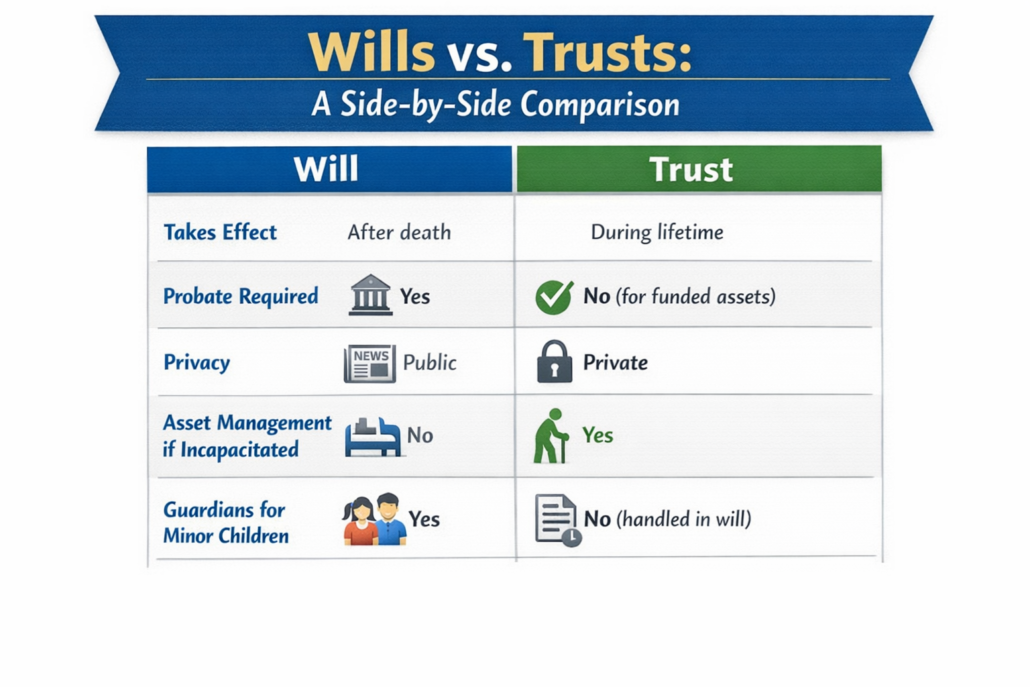
This is one option among several. For example, some jointly owned property and property already held in a properly funded trust may also pass outside probate. The best choice depends on how title is held, who should inherit and the rest of the estate plan.
How to Create a Valid Maryland TOD Deed
-
Identify the property and check its current title. The deed needs an accurate legal description, and existing ownership arrangements matter.
-
Name the beneficiaries. Consider backup beneficiaries in case your first choice dies before you.
-
Prepare and sign a compliant deed. It must meet Maryland deed requirements, clearly state that the transfer occurs at death, and be properly acknowledged before a notary or other authorized official.
-
Record the deed before death in the land records for every county where the real estate lies. A signed deed kept at home is not enough.
Maryland provides an optional statutory deed form, but a form does not resolve every ownership or family situation. Beneficiaries do not have to sign, accept or receive notice of the deed for it to be effective. Still, telling the right people where the deed is recorded can reduce confusion later.
For property in Pasadena, recording is through the Anne Arundel County Circuit Court land records. For property in Cheste…
What Happens While You Are Alive?
You keep your ownership rights. You may generally sell the property, refinance, place a mortgage on it or make a qualifying change to your TOD deed. Recording the TOD deed does not give the named beneficiary a present ownership interest. It also does not stop your creditors from pursuing rights they otherwise have.
Can You Change or Cancel a TOD Deed?
Yes. Before death, an owner may revoke or replace a recorded TOD deed by properly executing, acknowledging and recording a later TOD deed, a revocation instrument, or an applicable lifetime deed that revokes it expressly or by inconsistency. The rules become more complicated when several owners are involved.
You cannot cancel a recorded TOD deed simply by destroying your copy or by writing a conflicting instruction in a later will. If you marry, divorce or experience another major family change, have the deed reviewed promptly: Maryland law makes TOD transfers subject to particular protections and revocation rules concerning spouses and children.
What Happens After the Owner Dies?
If the TOD deed is effective and the beneficiary survives the owner, the beneficiary receives the interest described in the deed without probate for that property transfer. An alternate beneficiary may receive the property if the original beneficiary dies first and the deed provides for that result. Beneficiaries may disclaim an interest under Maryland law.
A TOD deed does not erase mortgages, liens, contracts or other valid interests affecting the property. The recipient takes subject to those obligations, and the statute does not provide a warranty of title.
Joint ownership deserves special attention. When the property is held by joint owners with survivorship rights, the surviving joint owner generally takes before the TOD designation becomes effective upon the last surviving joint owner’s death. Tenants in common are treated differently. If you own real estate with another person, review the current deed rather than assuming the TOD rules work the same way for everyone.
Where more than one beneficiary is named, Maryland provides a default of joint tenancy with right of survivorship unless the TOD deed specifies another form of ownership. That default may not fit every family.
What a TOD Deed Does Not Do
-
It does not avoid every tax. Maryland inheritance tax may still apply depending on the beneficiary. Close family members are generally exempt; other …
A separate rule exempts a TOD deed involving the owner’s primary or secondary residence from Maryland recordation tax and applicable state and county transfer taxes. That does not mean every property qualifies, that clerks charge no filing fees, or that an inheritance-tax obligation disappears. Investment property or farmland should be reviewed individually.
Is a TOD Deed a Good Fit for Your Maryland Home or Farm?
A TOD deed may be useful for an owner who wants a particular parcel of real estate to pass directly to clearly identified beneficiaries while preserving control during life. But it is not automatically the simplest answer for everyone.
Get individualized advice if you share ownership with someone else, have a blended family, want to leave property to a minor, have a beneficiary receiving needs-based benefits, own farmland or rental property, anticipate long-term-care expenses, or hold the property through a business entity. The right plan depends on the deed, the people involved and your broader goals.
Talk With David About Your Maryland Estate Plan
A transfer-on-death deed can be a useful tool, but choosing the wrong beneficiaries or overlooking h…
A transfer-on-death deed can be a useful tool, but choosing the wrong beneficiaries or overlooking how the property is titled can create problems for the people you intend to help. The Law Offices of David N. Mabrey serves clients in Anne Arundel and Kent Counties. To discuss whether a TOD deed fits your circumstances, call 443-702-7708 or reach out through the firm’s contact form.
Statutory sources: Md. Code Ann., Real Prop. §§ 14-1001 through 14-1014 (Maryland Transfer-on-Death Deed Act); 2026 Md. Laws ch. 750 (
The information in this article is provided for general informational purposes only and may not reflect the current law applicable to your particular circumstances. Nothing in this article constitutes legal advice or creates an attorney-client relationship. You should consult a licensed attorney about the specific facts and circumstances of your case.
Statutory sources: Md. Code Ann., Real Prop. §§ 14-1001 through 14-1014 (Maryland Transfer-on-Death Deed Act); 2026 Md. Laws ch. 750 (SB 651) and ch. 751 (HB 738) (effective Oct. 1, 2026).
Frequently Asked Questions
Do I need a lawyer to create a TOD deed in Maryland?
Maryland provides an optional statutory form, and a homeowner is not generally required to retain a lawyer solely to use it. However, a legal description, title issue, beneficiary designation or recording error can defeat the intended result. An attorney can review how the deed fits into the rest of your plan.
Can I use a transfer-on-death deed if my house has a mortgage?
Yes. A mortgage does not automatically prevent you from using a TOD deed. The mortgage remains attached to the property, and the beneficiary receives the property subject to existing obligations.
Does the beneficiary have to know about the TOD deed?
No. The law does not require notice, delivery or acceptance by the beneficiary while you are alive. It can still be useful to explain where important estate documents are kept.
What if my beneficiary dies before me?
A beneficiary who does not survive the owner generally cannot take under that designation. Naming an alternate beneficiary can help address that situation. Have the deed reviewed if your family circumstances change.
Is a TOD deed better than a living trust?
Neither is automatically better. A TOD deed addresses a transfer of real estate at death. A properly structured and funded trust may coordinate multiple assets and provide additional management options. The appropriate choice depends on your family, property and goals.