
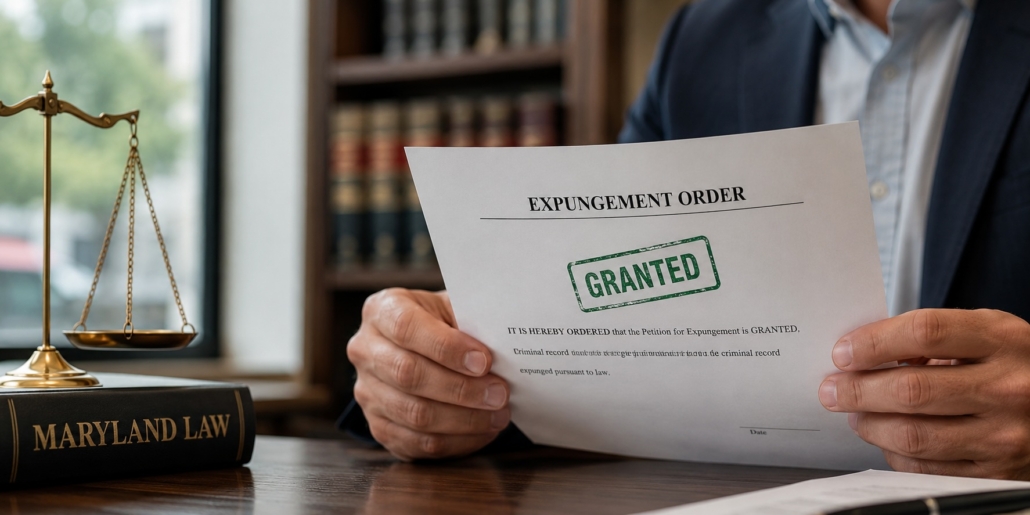
Maryland Expungement Guide: How to Clear Your Criminal Record and Open Doors for Employment
Every day in Maryland, people who served their time, completed their probation, or had charges dropped against them sit down to fill out a job application — and stop cold at the question about criminal history. Some check the box and never hear back. Some leave it blank and hope no one looks. Some simply don’t apply for jobs they’re qualified for because they’ve been told, or assumed, that their record makes them ineligible.
What many of those people don’t know is that Maryland law provides a legal mechanism to clear certain criminal records entirely — to petition a court to expunge an arrest, a charge, or in some cases a conviction from the publicly accessible record. An expunged record is not visible to most employers, landlords, or licensing boards. It does not appear on standard background checks. In many circumstances, a person whose record has been expunged can legally answer “no” to questions about prior criminal history.
Expungement does not erase the past. It does not affect court records held by certain law enforcement agencies or federal databases. It is not available for every charge or conviction. But for the hundreds of thousands of Marylanders carrying records that qualify — dismissed charges, not-guilty verdicts, probation before judgment dispositions, and certain misdemeanor convictions — expungement is one of the most consequential legal actions available, and one of the most underutilized.
This guide explains who qualifies, what the process looks like, and why clearing your record is worth pursuing.
Why Criminal Records Follow You Further Than Most People Realize
Before getting into the mechanics of expungement, it is worth understanding the full scope of what a criminal record actually affects — because most people significantly underestimate it.
Employment. The most obvious consequence. Maryland has adopted “ban the box” legislation that prohibits many employers from asking about criminal history on the initial job application, but background checks remain standard practice before a job offer is finalized.¹ A record that surfaces in a background check gives an employer a reason to withdraw an offer without explicitly citing the conviction — and in a competitive job market, that reason is often enough. Studies consistently show that individuals with criminal records face significantly lower callback rates from employers, even for charges that are years old and entirely unrelated to the job in question.²
Professional licensing. Maryland’s licensing boards — for nursing, teaching, social work, real estate, contracting, cosmetology, childcare, and dozens of other fields — have broad authority to deny, suspend, or revoke licenses based on criminal history.³ The severity of the impact depends on the nature of the offense and the profession, but a record that seems minor can become a significant obstacle when a licensing board has discretion to deny an application. Expungement removes the record from the public databases those boards typically search.
Housing. Landlords routinely run criminal background checks as part of the rental application process. A record — even for an old misdemeanor, even for a charge that was dismissed — can result in a denied application or a requirement for an additional deposit. In tight rental markets, a landlord with multiple qualified applicants has no incentive to choose the one with a criminal history on file.
Volunteering and community involvement. This is one of the most overlooked impacts of a criminal record. Coaching youth sports, volunteering at a school, serving on a nonprofit board, working with a religious organization’s outreach programs — virtually all of these activities now involve background checks. A record that has nothing to do with a person’s character today can bar them from contributing to their community in ways that have nothing to do with employment at all.
Federal benefits and public housing. Certain convictions can affect eligibility for federal housing assistance, student financial aid, and other public benefits.⁴ Expungement of qualifying Maryland charges can help restore access to opportunities that a record would otherwise foreclose.
Immigration status. For non-citizens, a criminal record — including arrests that did not result in conviction — can have serious immigration consequences.⁵ Expungement under Maryland law does not automatically resolve federal immigration issues, but it removes the state-level record and, in consultation with an immigration attorney, may be part of a broader strategy to address immigration consequences of prior criminal involvement.
What Maryland’s Expungement Law Actually Says
Maryland’s expungement statute is found in the Criminal Procedure Article, §§ 10-101 through 10-110.⁶ The law has been amended multiple times over the past decade, most significantly through the Justice Reinvestment Act of 2016 and subsequent legislation, which expanded eligibility to include certain convictions that were previously ineligible.⁷
The core question in any expungement analysis is whether the charge or conviction at issue falls within the categories the statute makes eligible. That analysis is more nuanced than most people expect — eligibility depends not just on the type of offense, but on how the case resolved, how much time has passed, and whether other charges on the same record affect eligibility.
Who Qualifies: The Categories of Eligible Cases
Charges that did not result in conviction. This is the broadest and most straightforward category. If you were arrested or charged and the case ended in any of the following ways, you are generally eligible for expungement:
- Acquittal (found not guilty at trial)
- Dismissal by the court
- Nolle prosequi (charges dropped by the prosecutor)
- Stet (case placed on the inactive docket indefinitely)
- Probation before judgment (PBJ), after the completion of probation
For acquittals, dismissals, and nolle prosequi dispositions, there is a waiting period of three years before filing — unless the State’s Attorney waives the waiting period, which can sometimes be negotiated.⁸ For stet dispositions, the waiting period is three years from the date the case was placed on the stet docket.⁹ For PBJ, the waiting period is three years from the satisfactory completion of probation.¹⁰
Certain misdemeanor convictions. The 2016 Justice Reinvestment Act and subsequent amendments expanded expungement eligibility to include a defined list of misdemeanor convictions after a waiting period of ten years from the date of the conviction or the completion of the sentence, whichever is later.¹¹ Eligible misdemeanors include, among others:
- Theft under $1,500
- Possession of a controlled dangerous substance (not including distribution)
- Disorderly conduct
- Trespassing
- Malicious destruction of property under $1,000
- Certain assault offenses
This list is specific and subject to change. Not every misdemeanor is eligible, and the eligibility of a particular offense requires careful review of the statute as currently written.
Certain drug convictions under the Cannabis Reform. Maryland’s legalization of adult-use cannabis and subsequent criminal justice reforms have created additional expungement pathways for marijuana-related convictions, including possession offenses that are no longer criminal under current law.¹² If your record includes marijuana possession charges — particularly for amounts that are now legal — you may have expungement options that did not exist a few years ago.
Convictions for crimes that have been decriminalized or repealed. If you were convicted of conduct that Maryland has since decriminalized or removed from the criminal code, expungement may be available regardless of the standard waiting periods.¹³
Who Does Not Qualify
Expungement eligibility has clear limits, and understanding them is just as important as understanding who qualifies.
Most felony convictions are not eligible. With limited exceptions, a conviction for a felony offense cannot be expunged under Maryland law. This includes violent felonies, serious drug distribution offenses, and crimes involving firearms. If your record includes a felony conviction, expungement of that specific charge is generally not available, though other charges on the same record may still be eligible.
Sex offenses. Convictions requiring registration as a sex offender are not eligible for expungement.¹⁴
DUI and DWI convictions. Convictions for driving under the influence or driving while impaired are specifically excluded from Maryland’s misdemeanor expungement provisions.¹⁵ A PBJ disposition on a DUI, however, may be eligible for expungement after the applicable waiting period — the distinction between a conviction and a PBJ matters significantly here.
Cases where other convictions on the same charging document are ineligible. This is one of the most commonly misunderstood aspects of Maryland expungement law. If you were charged with multiple offenses arising from the same incident, and one of those charges resulted in a conviction that is not eligible for expungement, that ineligible conviction may block expungement of the other charges from the same case — even if those other charges were dismissed or resulted in a PBJ.¹⁶ This “unit rule” requires careful analysis of your full record before filing.
The Expungement Process: Step by Step
Maryland’s expungement process is a formal court proceeding. It is not automatic, it is not handled administratively, and it does not happen on its own when a waiting period expires. You must affirmatively file a petition with the court, and the process has specific procedural requirements.
Step 1: Obtain your complete criminal record. Before filing anything, you need a complete picture of what’s on your record — every case, every charge, every disposition, in every county where you have ever had contact with the criminal justice system. The Maryland Judiciary Case Search database (casesearch.courts.state.md.us) is publicly accessible and provides case-level information, but it may not capture every record. The Maryland Criminal Justice Information System (CJIS) maintains the official criminal history record, and you can request your own record through the Maryland Department of Public Safety and Correctional Services.¹⁷
Step 2: Identify eligible charges and calculate waiting periods. With a complete record in hand, the analysis turns to which charges are eligible, whether the applicable waiting period has run, and whether the unit rule creates any complications. This step is where legal counsel adds the most value — the interaction between multiple charges, multiple cases, and the unit rule is not intuitive, and a filing error can result in denial or delay.
Step 3: File the petition in the appropriate court. The expungement petition must be filed in the court where the charge was originally filed — which may mean filing in multiple courts if your eligible charges were in different counties.¹⁸ Maryland has standardized expungement petition forms available through the court system. The petition must identify the specific case and charge sought to be expunged and must be accompanied by the applicable filing fee (currently $30 per petition, waived for acquittals and certain other not-guilty dispositions).¹⁹
Step 4: The State’s Attorney has an opportunity to object. After filing, the State’s Attorney for that jurisdiction has 30 days to file an objection to the expungement.²⁰ Objections are relatively uncommon for clearly eligible cases, but they do occur — particularly for cases where the State’s Attorney believes the public interest in maintaining the record outweighs the petitioner’s interest in expungement. If an objection is filed, a hearing is scheduled before a judge.
Step 5: Court review and order. If no objection is filed, or if the objection is overruled after a hearing, the court issues an expungement order. That order is then sent to the relevant law enforcement agencies, courts, and repositories — including CJIS — directing them to expunge the record.²¹ The full completion of the expungement process, including confirmation from all relevant agencies, can take several months after the order is issued.
Step 6: Verify completion. After receiving confirmation that the expungement is complete, request your own criminal history record again to verify that the expunged charges no longer appear. This verification step is important — administrative errors occur, and confirming the record reflects the expungement protects you when background checks are run in the future.
What Expungement Actually Does — and What It Doesn’t
What it does. An expunged record is removed from the Maryland Judiciary Case Search database, which is the primary public-facing record system that most employers, landlords, and licensing boards access. It is removed from CJIS, the state’s official criminal history repository. In most circumstances, you can legally respond to questions about criminal history by stating that you have not been convicted of — or charged with — the expunged offense.²²
What it doesn’t do. Expungement under Maryland law does not affect federal criminal records. It does not affect records maintained by federal agencies, including the FBI. It does not affect records in other states where charges may have been filed. It does not affect records in federal court. For purposes of federal background checks — required for certain federal employment, security clearances, and some professional licenses — an expunged Maryland record may still surface.²³
Expungement also does not automatically restore firearm rights if those rights were lost as a result of a conviction. Restoration of firearm rights is a separate legal process.
For non-citizens, expungement of a Maryland criminal record does not automatically resolve any immigration consequences of the underlying offense. Immigration law treats expunged convictions differently than domestic employment law does, and the interaction between state expungement and federal immigration consequences requires consultation with an immigration attorney.
Expungement and Employment: The Practical Impact
The practical employment impact of expungement is significant and well-documented. Research consistently shows that expungement leads to measurable improvements in employment outcomes — higher wages, more stable employment, and access to jobs and industries that were previously inaccessible.²⁴
Maryland’s ban-the-box law, the Criminal Record Screening Practices Act, prohibits most employers with 15 or more employees from asking about criminal history until after a conditional offer of employment has been made.²⁵ But that protection only delays the question — it doesn’t eliminate the background check. Expungement eliminates the record itself, which means the background check comes back clean and the question of how to handle a criminal history never arises.
For jobs that require security clearances, professional licenses, or work with vulnerable populations — children, elderly individuals, people with disabilities — expungement is particularly consequential. These are precisely the fields where a criminal record creates the highest barriers, and where a clean record opens the most doors.
A Note on Certificates of Relief and Pardons
For convictions that are not eligible for expungement, Maryland offers two additional mechanisms that can help mitigate the impact of a criminal record.
Certificate of Relief. Maryland law allows a court to issue a Certificate of Relief to a person convicted of certain nonviolent offenses, providing relief from specific collateral consequences of the conviction — such as the automatic disqualification from certain licenses or certifications.²⁶ A Certificate of Relief does not expunge the record, but it can remove specific legal barriers that the conviction would otherwise create.
Governor’s Pardon. A pardon from the Governor of Maryland acknowledges rehabilitation and forgives the offense, but it does not expunge the record — the conviction remains on the record and is still visible on background checks.²⁷ A pardon can, however, demonstrate rehabilitation for purposes of licensing board review, immigration proceedings, or other contexts where the fact of forgiveness carries weight. Pardons are granted at the Governor’s discretion and are typically reserved for cases involving significant demonstrated rehabilitation over a long period of time.
Frequently Asked Questions
How do I know if my specific charge is eligible for expungement?
The eligibility analysis depends on the specific charge, how the case resolved, how much time has passed, and what else is on your record. The most reliable way to get a definitive answer is to have an attorney review your complete criminal history. Maryland Judiciary Case Search is a starting point for identifying your cases, but a full CJIS record request gives a more complete picture.
Can I expunge a record from another state while living in Maryland?
No. Maryland’s expungement law only covers Maryland criminal records. To expunge a record from another state, you must follow that state’s expungement procedure, which varies significantly from Maryland’s. An attorney can help you identify the applicable law in the relevant state and, in some cases, coordinate the filing even if you no longer live there.
If my charge was expunged, can I say I was never arrested?
In most employment and licensing contexts, yes — Maryland law allows a person with an expunged record to respond to questions about prior criminal history as though the arrest or charge did not occur.²⁸ There are exceptions, including applications for law enforcement positions, certain state and federal government jobs, and some professional licensing applications that specifically require disclosure of expunged records. An attorney can advise you on the specific context in which the question is being asked.
Does expungement affect my ability to own a firearm?
It depends on the underlying conviction and how it affected your firearm rights. Expungement of a charge that resulted in a PBJ or dismissal typically does not affect firearm rights in the same way a conviction does. But if a conviction resulted in a loss of firearm rights, expungement alone does not automatically restore them — a separate proceeding is required. This is an area where legal advice specific to your situation is essential.
How long does the expungement process take from start to finish?
From filing to final confirmation, the process typically takes three to six months. The State’s Attorney has 30 days to object, the court issues its order after that period, and the order must then be processed by each relevant agency. In straightforward cases without objection, the timeline is relatively predictable. Complex cases or cases with objections take longer.
Do I need an attorney to file for expungement?
Maryland provides standardized forms and you can file without an attorney. However, the eligibility analysis — particularly for cases involving multiple charges, the unit rule, or convictions on the eligible misdemeanor list — is complex enough that errors in the petition can result in denial. An attorney ensures the analysis is correct before filing, handles any State’s Attorney objections, and follows through to confirm the expungement is complete across all relevant agencies.
Your record shouldn’t define what you’re allowed to become.
If you have a Maryland criminal record and want to understand whether expungement is available to you, Mabrey Law can help. We’ll review your full record, identify every eligible charge, and handle the filing from start to finish — so you can move forward with confidence.
Chestertown — 107 Court St, Chestertown, MD 21620 · (410) 778-1630
Pasadena — 8611 Fort Smallwood Rd C, Pasadena, MD 21122 · (443) 702-7708
This article is for general informational purposes only and does not constitute legal advice. Consult an attorney regarding your specific situation.
Sources
- Md. Code Ann., State Government Article § 20-604 (Maryland ban-the-box law, Criminal Record Screening Practices Act).
- Doleac, J.L. & Hansen, B., The Unintended Consequences of Ban the Box, Journal of Labor Economics (2020); Pager, D., The Mark of a Criminal Record, American Journal of Sociology (2003).
- See, e.g., Md. Code Ann., Health Occupations Article § 8-316; Education Article § 6-106; Business Occupations and Professions Article § 17-322.
- 42 U.S.C. § 13661 (public housing restrictions based on criminal history); 20 U.S.C. § 1091(r) (federal student aid restrictions).
- 8 U.S.C. § 1227(a)(2) (deportation grounds for criminal convictions); Padilla v. Kentucky, 559 U.S. 356 (2010).
- Md. Code Ann., Criminal Procedure Article §§ 10-101 through 10-110.
- Justice Reinvestment Act of 2016, 2016 Md. Laws ch. 515.
- Md. Code Ann., Criminal Procedure Article § 10-105(c)(1) (three-year waiting period for nolle prosequi and dismissal).
- Md. Code Ann., Criminal Procedure Article § 10-105(c)(2) (three-year waiting period for stet).
- Md. Code Ann., Criminal Procedure Article § 10-105(c)(3) (three-year waiting period after completion of PBJ probation).
- Md. Code Ann., Criminal Procedure Article § 10-110 (expungement of certain misdemeanor convictions after ten years).
- Md. Code Ann., Criminal Law Article § 5-601 (cannabis possession); 2023 Md. Laws ch. 11 (cannabis legalization and expungement provisions).
- Md. Code Ann., Criminal Procedure Article § 10-110(b) (convictions for offenses no longer crimes).
- Md. Code Ann., Criminal Procedure Article § 10-107 (sex offender registration convictions ineligible).
- Md. Code Ann., Criminal Procedure Article § 10-110(d) (DUI/DWI convictions excluded from misdemeanor expungement).
- Md. Code Ann., Criminal Procedure Article § 10-107(a)(3); State v. Hicks, 457 Md. 300 (2018) (unit rule in expungement proceedings).
- Maryland Department of Public Safety and Correctional Services, Criminal Justice Information System, dpscs.maryland.gov/cjis.
- Md. Code Ann., Criminal Procedure Article § 10-103 (petition filed in court where charge was filed).
- Md. Code Ann., Criminal Procedure Article § 10-104 (filing fee); Maryland Rule 4-508.
- Md. Code Ann., Criminal Procedure Article § 10-105(a) (30-day objection period for State’s Attorney).
- Md. Code Ann., Criminal Procedure Article § 10-105(d) (expungement order sent to relevant agencies).
- Md. Code Ann., Criminal Procedure Article § 10-109 (effect of expungement on obligation to disclose).
- 28 U.S.C. § 534; FBI Criminal Justice Information Services, Interstate Identification Index — federal records not subject to state expungement orders.
- Selbin, J. et al., Relief, Rehabilitation, and Reintegration: The Role of Criminal Record Expungement, California Law Review (2018).
- Md. Code Ann., State Government Article § 20-604 (ban-the-box provisions and employer obligations).
- Md. Code Ann., Criminal Procedure Article § 10-301 et seq. (Certificate of Relief).
- Md. Const. art. II, § 20 (Governor’s pardon power); pardon does not expunge conviction from record.
- Md. Code Ann., Criminal Procedure Article § 10-109(b) (right to deny existence of expunged charge in most contexts).







Leave a Reply
Want to join the discussion?Feel free to contribute!