

The Summer “Under 21” DUI Surge: Protecting Your Graduate’s Future
Graduation season on Maryland’s Eastern Shore looks a lot like it does everywhere else — backyard parties, bonfires near the water, families celebrating kids who worked hard to get to this moment. For most, the night ends with memories worth keeping. For some families, it ends with a phone call no parent is prepared for.
Maryland has some of the strictest underage DUI laws in the country. For drivers under 21, the legal limit isn’t .08 — it’s .02. That’s one drink for most young adults. A single lapse in judgment on the way home from a graduation party can trigger an arrest, a license suspension, and a criminal charge that follows a young person into college applications, job interviews, and professional licensing boards for years to come.
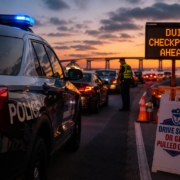
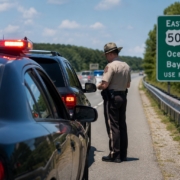
Every June and July, the volume of underage DUI arrests in Maryland rises sharply. Graduation parties, beach weekends, Fourth of July celebrations — the combination of newly minted freedom, social pressure, and access to alcohol creates conditions that law enforcement anticipates and prepares for. Checkpoints go up. Patrols increase. And families who had no reason to think about criminal defense attorneys suddenly find themselves searching for one on a Saturday night.
If your son or daughter was arrested this summer, the decisions made in the next few days matter enormously. This guide walks through what Maryland law actually says, what the consequences actually look like, and what an experienced attorney can do to protect your graduate’s future before permanent damage is done.
Maryland’s Zero-Tolerance Law: The Standard Most Families Don’t Know Until It’s Too Late
Most people know that the legal BAC limit for adult drivers in Maryland is .08. Far fewer realize that Maryland operates under a separate, far stricter standard for anyone under 21 — and that the gap between what feels like “barely anything” and what triggers a criminal charge is razor thin.
Under Maryland’s zero-tolerance law, a driver under 21 with a BAC of .02 or higher can be charged with a DUI — even if they show no visible signs of impairment, even if they drove without incident, and even if the amount consumed seems trivial by any practical measure.¹ A BAC of .02 is achievable for many young adults after a single standard drink, depending on body weight, metabolism, and how recently they ate.
Maryland Transportation Article § 16-813 makes this explicit: it is unlawful for a person under 21 to drive or attempt to drive a motor vehicle while having an alcohol concentration of .02 or more.² There is no “impaired driving” threshold to clear, no visible swerving required, no slurred speech necessary. The number alone is sufficient.
This is a deliberate policy choice by the state. Maryland, like all states, adopted zero-tolerance laws under federal pressure in the 1990s, and Maryland’s implementation is among the most strictly enforced.³ The legislature’s intent was to remove any ambiguity for young drivers: if you are under 21 and you drink anything before driving, you are at legal risk. Period.
Understanding that framework is essential, because it shapes everything that follows. The standard your graduate is being held to is not the same standard applied to adults. It is stricter, it is enforced aggressively during summer months, and it carries consequences that extend far beyond the night of the arrest.
What’s Actually at Stake: The Full Picture
Parents sometimes assume an underage DUI is a minor infraction — something that gets expunged, paid off with a fine, and forgotten. That assumption is one of the most expensive mistakes a family can make. The consequences of an underage DUI in Maryland touch virtually every major life milestone a young adult is approaching.
A permanent criminal record. A DUI conviction in Maryland is a criminal matter, not a civil infraction. It is not automatically expunged. It appears on background checks run by colleges, employers, landlords, graduate school admissions offices, and professional licensing boards. For a seventeen or eighteen year old who just graduated high school, or a twenty year old about to finish college, this mark arrives at precisely the moment their record begins to matter most.
Driver’s license suspension. The Maryland Motor Vehicle Administration treats the administrative side of a DUI entirely separately from the criminal case. These are two parallel proceedings, and families are often blindsided when they realize they can do everything right on the criminal side and still lose the license on the administrative side — or vice versa. A driver under 21 who fails or refuses a breath test faces an MVA-imposed license suspension that begins before any criminal conviction.⁴ For a young adult who drives to work, to class, or to medical appointments, this can be immediately devastating.
College enrollment complications. Many colleges and universities require applicants and enrolled students to disclose criminal charges and convictions. A pending DUI charge — not even a conviction, just an open charge — can complicate fall enrollment for a student who was already accepted. Schools handle these disclosures differently, but few simply ignore them. Some require a conduct review. Some defer enrollment. And a conviction that occurs while a student is already enrolled can trigger disciplinary proceedings under the student code of conduct, separate from anything happening in the courts.⁵
Federal financial aid. Under the Higher Education Act, students convicted of drug-related offenses can lose eligibility for federal financial aid, including Pell Grants, subsidized loans, and work-study programs.⁶ While alcohol-related DUI convictions are treated differently than drug convictions under this provision, the overlap — particularly when a case involves both alcohol and any controlled substance — can create real financial aid risk that families don’t anticipate.
Scholarships. Merit-based scholarships, athletic scholarships, and private foundation awards frequently include conduct clauses in their terms. An arrest — even without a conviction — can trigger a review. A conviction can result in revocation. For a student whose college plan depends on scholarship funding, this is not a theoretical risk.
Professional licensing. This is where the long tail of an underage DUI becomes most serious. Maryland licensing boards for nursing, education, accounting, real estate, law, medicine, pharmacy, and dozens of other professions have broad authority to consider an applicant’s criminal history when evaluating fitness for licensure.⁷ A DUI conviction at age nineteen can surface fifteen years later on a nursing license application or a bar admission background check. The earlier in life the conviction occurs, the more professional checkpoints it has the potential to complicate.
Employment background checks. Even for graduates entering fields that don’t require professional licensure, a criminal conviction on a background check creates friction. Many employers — particularly in finance, government contracting, education, and healthcare — screen for criminal history as a standard part of hiring. A DUI doesn’t automatically disqualify a candidate in every situation, but it requires explanation, and it gives a hiring manager a reason to pass on a candidate when other options are available.
Military service and security clearances. For graduates considering military enlistment or careers that require federal security clearances, a DUI conviction is a material obstacle. Waiver processes exist, but they add complexity, delay, and uncertainty to a path that was previously straightforward.
The point is not to catastrophize. Many people with a DUI in their past have gone on to build successful careers and full lives. The point is that none of these consequences are inevitable — and the window to avoid them is open right now, in the days and weeks following an arrest.
The 10-Day Window You Cannot Afford to Miss
When a driver under 21 is arrested for DUI in Maryland and their license is confiscated, they receive a paper temporary license. Most families don’t realize that this document comes with one of the most important deadlines in the entire case printed on it — and that missing it forfeits a critical right.
To contest the MVA license suspension — entirely separate from fighting the criminal charge — the driver or their attorney must request a hearing within 10 days of the arrest.⁸ Miss that window, and the right to contest the suspension is waived entirely. The suspension proceeds automatically, on the MVA’s schedule, without any opportunity to present evidence or challenge the basis for the suspension.
This deadline catches families off guard constantly. The arrest happens on a Friday night. The family spends the weekend processing what happened, trying to get the graduate home, figuring out what to tell the other parent, maybe assuming things will settle down. By the time Monday comes and they start thinking about next steps, four days of the ten-day window are already gone.
By the time many families consult a lawyer — sometimes after the holiday weekend, sometimes after waiting to see if the charge “goes anywhere” — the deadline has passed. And unlike many legal deadlines, this one has no exception for excusable neglect, no motion for reconsideration, and no way to reopen the administrative case once the window closes.
If your graduate was arrested, the first call to an attorney should happen within 24 to 48 hours. Not after the long weekend. Not after you’ve figured out exactly what happened. Not after the court date. Now.
How the Criminal Case and the MVA Case Work Together
One of the most confusing aspects of an underage DUI arrest in Maryland is that it generates two entirely separate legal proceedings that run on different tracks, in different venues, under different rules — but whose outcomes are linked in important ways.
The criminal case is filed in the District Court of Maryland for the county where the arrest occurred. It is prosecuted by the State’s Attorney’s office. The potential outcomes range from a conviction (which produces a criminal record) to a probation before judgment disposition (which avoids a formal conviction) to a dismissal or acquittal. This case proceeds on the court’s schedule, which typically means an initial appearance followed by a trial date several months out.
The MVA administrative case is handled entirely separately by the Motor Vehicle Administration. Its concern is not guilt or innocence in the criminal sense — it is whether the driver’s license should be suspended based on the breath test result or refusal. The MVA operates under its own procedures, its own hearing officers, and its own timeline. A favorable outcome in the criminal case does not automatically restore a license suspended by the MVA. Conversely, a license suspension by the MVA does not constitute a criminal conviction.
An experienced DUI attorney manages both tracks simultaneously. They file the MVA hearing request within the 10-day window, appear at the MVA hearing to contest the suspension, and work the criminal case in parallel. Missing either track — or handling one without attention to the other — leaves a significant portion of the problem unaddressed.
What an Experienced DUI Attorney Actually Does
Hiring an attorney after an underage DUI arrest is not an admission that something wrong happened. It is a recognition that the legal system is complex, that the stakes are high, and that navigating it without guidance produces worse outcomes than navigating it with representation. Here is what experienced advocacy actually looks like in practice.
Preserving the MVA hearing right immediately. The first action is filing the hearing request before the 10-day deadline closes. This alone preserves the opportunity to contest the license suspension and potentially keep your graduate driving during the pendency of the case — which matters for work, school, and daily life.
Investigating the traffic stop. Every DUI case begins with a traffic stop, and that stop must be legally justified. Law enforcement must have reasonable articulable suspicion to stop a vehicle in the first place.⁹ If the stop was based on a pretextual reason, or if the officer lacked sufficient basis to initiate the encounter, the evidence obtained from that stop — including the breath test result — may be subject to suppression. An attorney reviews the police report, the dashcam and bodycam footage, and the officer’s notes to identify any deficiencies in the stop.
Reviewing field sobriety test administration. Standardized field sobriety tests — the walk-and-turn, the one-leg stand, the horizontal gaze nystagmus test — are governed by specific administration protocols developed by the National Highway Traffic Safety Administration.¹⁰ When officers deviate from those protocols, the reliability of the tests is compromised and their admissibility can be challenged. An attorney who handles DUI cases regularly knows what proper administration looks like and where shortcuts are commonly taken.
Challenging the breath test. Breathalyzer equipment requires regular calibration and maintenance. The test must be administered within specific timeframes and under specific conditions. The officer administering the test must be properly certified. The device’s maintenance records are discoverable. Any gap in the chain of proper procedure creates a challengeable issue. For blood draws, the chain of custody of the sample — from collection to lab analysis — must be documented and unbroken. These are not technicalities; they are the evidentiary foundations on which the case rests.
Pursuing probation before judgment. Maryland’s Criminal Procedure Article § 6-220 allows a court to grant probation before judgment (PBJ) to a qualifying defendant — most commonly a first-time offender.¹¹ Under PBJ, the defendant pleads guilty or is found guilty, but the court does not enter a formal judgment of conviction. The defendant completes a period of probation, and if successful, the charge does not result in a conviction on the criminal record. For a young adult with no prior history, PBJ can be the single most important outcome in the case. It is not automatic, it must be argued for with a credible presentation of the client’s character and circumstances, and it is not available in every case — but pursuing it aggressively is often the right strategy for a first-time offender.
Considering diversion programs. Some Maryland jurisdictions offer diversion or early disposition programs for young, first-time offenders that can resolve cases with treatment, community service, or education requirements rather than criminal proceedings. Availability varies by county and by the specific facts of the case, but an attorney familiar with the local court knows what programs exist and whether your graduate might qualify.
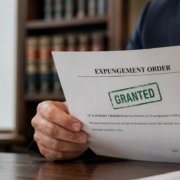
Planning for expungement from the start. Maryland law allows certain charges and dispositions to be expunged from the record after a waiting period, subject to eligibility rules that depend on the outcome of the case.¹² An attorney who is thinking about the long game structures the resolution of the case with expungement eligibility in mind from the beginning — not as an afterthought years later.
A Word to Parents
If you’re reading this in the hours after your child’s arrest, the mix of fear, frustration, and guilt is completely understandable. So is the instinct to minimize — to hope this goes away on its own, or that a judge will see a good kid who made one mistake and respond with leniency.
Judges do see good kids who made one mistake. What they see less frequently, without experienced advocacy, is a clear argument for why that good kid deserves the best possible outcome the law allows. Maryland’s courts process thousands of DUI cases every year. A young defendant without representation is navigating a system that is not designed to walk them through their options, explain what they’re agreeing to, or flag the long-term consequences of the plea they’re about to enter.
The families who navigate these situations best are the ones who called an attorney first — before the arraignment, before the initial appearance, and certainly before the 10-day MVA deadline expired. The families who struggle are those who waited, assumed the system would be fair on its own, or tried to handle it without guidance and then called after options had already closed.
David Mabrey has spent years representing minors and young adults in Maryland criminal proceedings, including underage DUI cases across Anne Arundel County, the Eastern Shore, and surrounding jurisdictions. He understands both the legal mechanics of these cases and the real-world stakes for young clients whose futures are just beginning. The goal in every case is the same: minimize the impact on the client’s life, protect their record wherever possible, and make sure one mistake at a graduation party doesn’t become the defining entry on a background check.
Frequently Asked Questions
My child blew a .03 — isn’t that basically nothing?
Under Maryland’s zero-tolerance law, .02 is the threshold for drivers under 21. A .03 is legally sufficient for a charge. The question isn’t whether the number seems low in isolation — it’s whether the legal threshold was crossed. It was. What matters now is how the case is handled from this point forward.
Can we just pay the fine and move on?
A DUI in Maryland is a criminal charge, not a traffic ticket. There is no fine you can pay to make it go away. Entering a guilty plea — which is effectively what happens when someone resolves a case without contesting it — results in a criminal conviction on the record. The goal of representation is to pursue every available avenue to avoid that outcome, or to minimize its severity through PBJ or other dispositions.
What if my child refused the breath test?
Refusal triggers an automatic license suspension under Maryland’s implied consent law — and the suspension period for refusal is longer than the suspension for a failed test.¹³ Refusal also does not prevent a charge; police can seek a warrant for a blood draw in certain circumstances, and the refusal itself can be used as evidence in the criminal case. An attorney needs to be involved immediately, and the 10-day MVA hearing request is just as urgent after a refusal as after a failed test.
Will this affect my child’s college acceptance or fall enrollment?
It depends on the school, the timing, and how the case resolves. Many colleges require disclosure of criminal charges on applications and mid-year enrollment updates. A pending charge can complicate fall enrollment at schools that conduct ongoing background reviews. A conviction is more serious. Resolving the case favorably — through PBJ, dismissal, or acquittal — materially reduces the risk to enrollment and keeps expungement options open.
My child is 17 — does the juvenile system work differently?
Yes, significantly. Seventeen-year-olds in Maryland may be processed through the juvenile justice system depending on the circumstances of the arrest, and the juvenile system operates under different rules, with different confidentiality protections and different disposition options than adult criminal court.¹⁴ An attorney needs to assess immediately which system applies and what the strategy should be in either track.
How quickly do we really need to act?
The MVA hearing request must be filed within 10 days of the arrest. That deadline is absolute — there is no exception, no extension, and no way to recover it once it passes. Beyond that deadline, every additional day that passes without an attorney involved is a day during which evidence is not being gathered, footage is not being requested, and options are not being evaluated. The answer is: as quickly as possible, and ideally within the first 24 to 48 hours.
One mistake shouldn’t follow your graduate for the rest of their life.
If your son or daughter was arrested for an underage DUI in Maryland, time matters. Contact Mabrey Law today to discuss your options before the window closes.
Chestertown — 107 Court St, Chestertown, MD 21620 · (410) 778-1630
Pasadena — 8611 Fort Smallwood Rd C, Pasadena, MD 21122 · (443) 702-7708
This article is for general informational purposes only and does not constitute legal advice. Consult an attorney regarding your specific situation.
Sources
- Md. Code Ann., Transportation Article § 16-813 (zero tolerance for persons under 21).
- Id.
- National Highway Traffic Safety Administration, Zero Tolerance Laws, nhtsa.gov; 23 U.S.C. § 161 (federal incentive for zero tolerance laws).
- Md. Code Ann., Transportation Article § 16-205.1 (administrative per se suspension for drivers under 21).
- See generally National Association of Student Personnel Administrators, Crime Reporting and Disciplinary Policies (2022).
- Higher Education Act of 1965, 20 U.S.C. § 1091(r) (drug conviction impact on federal student aid eligibility).
- See, e.g., Md. Code Ann., Health Occupations Article § 8-316 (nursing board character review); Business Occupations and Professions Article § 10-214 (real estate licensing); Maryland Rules of Professional Conduct (bar admission character and fitness review).
- Md. Code Ann., Transportation Article § 16-205.1(b)(2) (10-day hearing request requirement).
- Terry v. Ohio, 392 U.S. 1 (1968); State v. Williams, 401 Md. 676 (2007).
- NHTSA, Standardized Field Sobriety Testing Student Manual, HS 178 R2/06 (2006 ed.).
- Md. Code Ann., Criminal Procedure Article § 6-220 (probation before judgment).
- Md. Code Ann., Criminal Procedure Article §§ 10-101 et seq. (expungement of records).
- Md. Code Ann., Transportation Article § 16-205.1(h) (refusal suspension periods exceed test-failure suspension periods).
- Md. Code Ann., Courts and Judicial Proceedings Article § 3-8A-03 (juvenile court jurisdiction); § 3-8A-06 (transfer to adult court).




Leave a Reply
Want to join the discussion?Feel free to contribute!